
Video games are an extremely popular pastime in the U.S. The Entertainment Software Association shares that from 2005-2009 the video game industry grew seven times faster than the country’s economy overall, and that it will continue to grow at 5% annually through 2015. In 2012, the various video game manufacturers sold 174 million video games.
That is good news for the economy, but not such great news for the environment. Video games and the consoles required to play them are made with large amounts of plastic — and not the kind of that can be recycled at the curb (in most cases). When you are ready to dispose of video games for whatever reason, you will need to find a specialized recycler to take them. Luckily, that may be easier than you think.
 Video games come in a couple different formats. Today, almost all video games are on DVDs or Blu-ray discs. Both are made of a specialized material called polycarbonate plastic, which is classified as a #7 plastic (the catchall for “other” types of plastic). Because of this, video game discs can be mixed with other DVDs, Blu-rays and CDs for recycling.
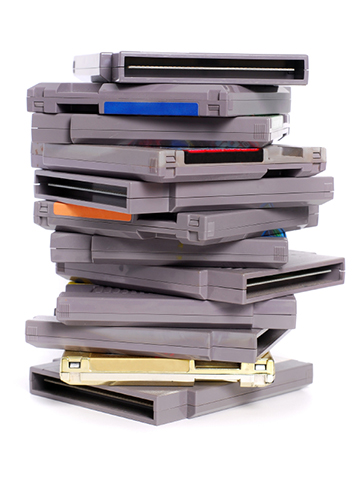
If you have an older video game system or a handheld Nintendo 3DS, you likely have stack of grey, black or white plastic cartridges hanging around. These “carts,” as they are sometimes called, are made of plastic but also contain circuit boards imbedded with different metals.
It is worth recycling video games for a couple reasons. Like all plastics, they are made with petroleum and will not biodegrade. If they are placed in incinerators they can release toxic chemicals. In addition, both circuit boards and certain DVDs can contain precious metals like gold. Precious metals are not renewable resources and are extremely valuable. Mining them is tough on the environment. No Dirty Gold describes gold mining as “one of the most destructive industries in the world,” pointing to the water and soil pollution, destruction of natural areas and worker rights violations that are so often associated with mining.
In most cases, video game cases are made of #6 plastic, also known as polystyrene, or PS. Polystyrene can be melted down and turned back into toys, smoke detector cases, kitchenware and a number of other rigid consumer products.
Video games come in a couple different formats. Today, almost all video games are on DVDs or Blu-ray discs. Both are made of a specialized material called polycarbonate plastic, which is classified as a #7 plastic (the catchall for “other” types of plastic). Because of this, video game discs can be mixed with other DVDs, Blu-rays and CDs for recycling.
If you have an older video game system or a handheld Nintendo 3DS, you likely have stack of grey, black or white plastic cartridges hanging around. These “carts,” as they are sometimes called, are made of plastic but also contain circuit boards imbedded with different metals.
It is worth recycling video games for a couple reasons. Like all plastics, they are made with petroleum and will not biodegrade. If they are placed in incinerators they can release toxic chemicals. In addition, both circuit boards and certain DVDs can contain precious metals like gold. Precious metals are not renewable resources and are extremely valuable. Mining them is tough on the environment. No Dirty Gold describes gold mining as “one of the most destructive industries in the world,” pointing to the water and soil pollution, destruction of natural areas and worker rights violations that are so often associated with mining.
In most cases, video game cases are made of #6 plastic, also known as polystyrene, or PS. Polystyrene can be melted down and turned back into toys, smoke detector cases, kitchenware and a number of other rigid consumer products.
What are video games made of?
Video games come in a couple different formats. Today, almost all video games are on DVDs or Blu-ray discs. Both are made of a specialized material called polycarbonate plastic, which is classified as a #7 plastic (the catchall for “other” types of plastic). Because of this, video game discs can be mixed with other DVDs, Blu-rays and CDs for recycling.
If you have an older video game system or a handheld Nintendo 3DS, you likely have stack of grey, black or white plastic cartridges hanging around. These “carts,” as they are sometimes called, are made of plastic but also contain circuit boards imbedded with different metals.
It is worth recycling video games for a couple reasons. Like all plastics, they are made with petroleum and will not biodegrade. If they are placed in incinerators they can release toxic chemicals. In addition, both circuit boards and certain DVDs can contain precious metals like gold. Precious metals are not renewable resources and are extremely valuable. Mining them is tough on the environment. No Dirty Gold describes gold mining as “one of the most destructive industries in the world,” pointing to the water and soil pollution, destruction of natural areas and worker rights violations that are so often associated with mining.
In most cases, video game cases are made of #6 plastic, also known as polystyrene, or PS. Polystyrene can be melted down and turned back into toys, smoke detector cases, kitchenware and a number of other rigid consumer products.
